
Views: 0 Author: Site Editor Publish Time: 2026-09-02 Origin: Site


 The Toyota GT86 remains one of the most interesting Japanese sports cars for customization in 2026. Its compact dimensions, rear-wheel-drive layout, sharp proportions, and strong enthusiast following make it a natural platform for exterior styling projects. For UK workshops, vehicle modification specialists, distributors, and automotive businesses, that creates an ongoing opportunity around the Toyota GT86 body kit market.But choosing a supplier is not simply about finding a design that looks aggressive in photographs. B2B buyers need to think about fitment, production consistency, component availability, installation requirements, packaging, documentation, and communication. A spectacular design is only useful to a workshop if it can be supplied and installed reliably.This guide looks at 10 manufacturers and design brands relevant to the Toyota GT86 market in 2026: HT Autos, Maxton Design, AMP-Z, Liberty Walk, Robot Craftsman, BLITZ, APR Performance, Rocket Bunny Pandem, TRD, and MODELLISTA. The focus is deliberately business-oriented, so you can assess these names from the perspective of sourcing, workshop projects, dealership offerings, and repeat customer demand.
The GT86 has something many newer performance cars struggle to offer: simplicity. Its body is relatively clean, making it an excellent foundation for visual transformation. A modest front extension can sharpen the car without changing its identity, while a complete wide-body conversion can create an entirely different road presence.For businesses, this flexibility matters. You are not dealing with a platform that only suits one styling direction. The same vehicle can be developed into a subtle street build, a track-inspired project, a show car, or a dramatic wide-body conversion.
Please click here for the annual big September sale!
The GT86's proportions give designers plenty of room to experiment. The long bonnet, low roofline, short overhangs, and relatively compact cabin provide a strong visual base for aerodynamic extensions and body-shaping components.That means a Toyota GT86 body kit can be positioned at several levels. A workshop may only need a front lip and side skirts for a customer seeking a cleaner appearance. Another client may want a complete bumper package, rear extensions, over-fenders, and complementary styling pieces.This range creates opportunities for both specialist installers and distributors. Instead of selling one fixed product, a business can build different packages around different customer profiles.
UK B2B buyers tend to look beyond styling. Fitment accuracy is crucial because every additional hour spent correcting alignment affects workshop efficiency. A supplier's ability to provide clear product information is equally important.Businesses also need dependable communication. If a workshop has a customer vehicle occupying a bay, uncertainty around components can quickly become an operational problem. The best supplier relationship therefore feels less like a simple transaction and more like an extension of the workshop's supply chain.
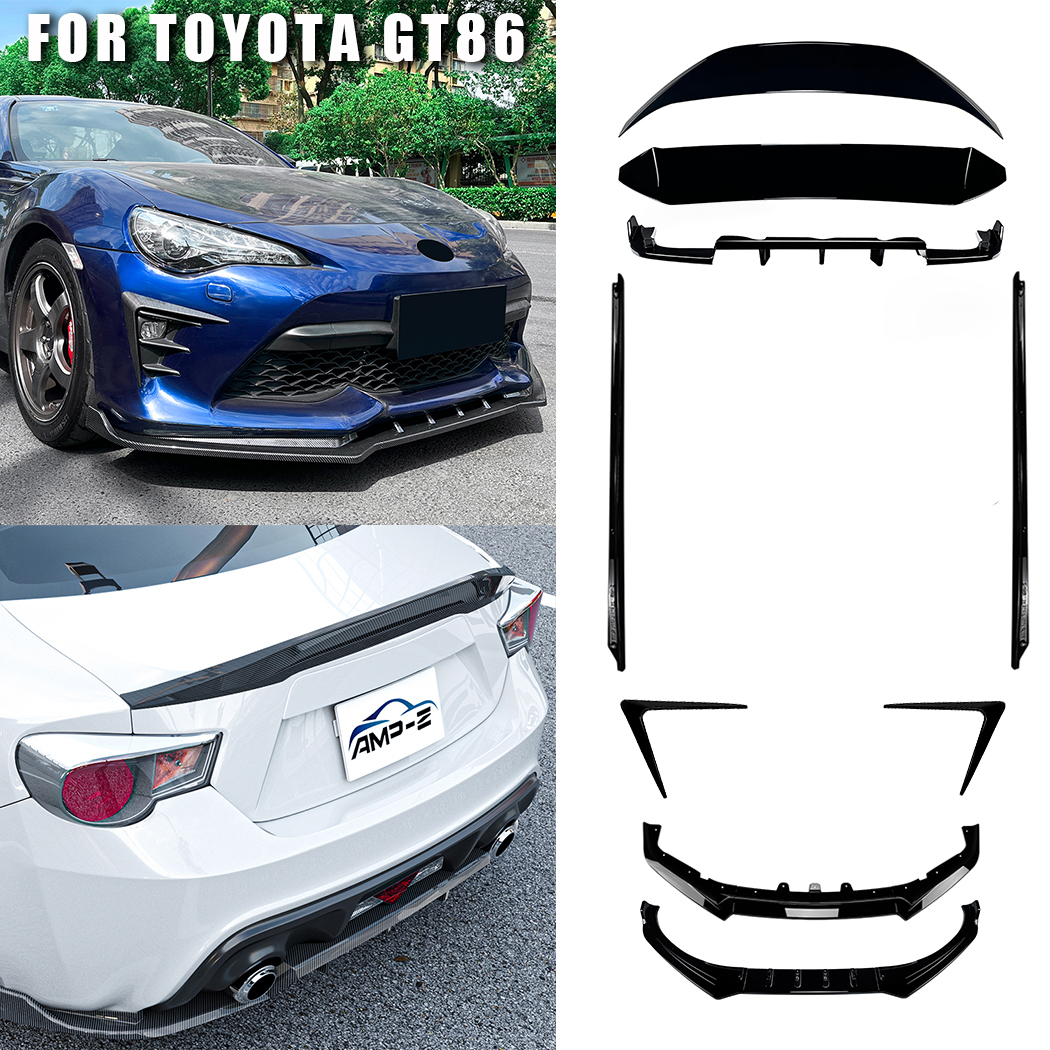
Full Body Kit Set For Toyota GT86
Before choosing a manufacturer, it helps to separate appearance from business performance. A strong supplier should satisfy both.
First, examine how the kit integrates with the original body lines. Good design does not necessarily mean extreme design. Sometimes the most commercially useful product is one that adds visual definition while remaining practical for road-going customers.Fitment information should also be clear. Model year, bumper configuration, installation method, required hardware, and compatibility notes can all influence a workshop's installation process.
Consistency becomes increasingly important when you move from one-off projects to B2B supply. A body kit that fits one vehicle beautifully but varies significantly between production batches creates unnecessary risk.For distributors, repeatability is particularly valuable. Your customer expects the second order to meet the same standard as the first. That is why manufacturing experience, quality control, and product development processes deserve as much attention as styling.
A B2B relationship involves more than shipping a box. Product images, technical specifications, installation guidance, application information, and responsive communication can all make a difference.For a UK workshop, these details help staff answer customer questions quickly. For a distributor, they make it easier to create product listings and sales materials without repeatedly requesting basic information.
Large exterior components require careful handling. Front splitters, side skirts, rear spoilers, and rear diffusers significant space, so packaging and logistics should be considered during supplier selection.For international B2B orders, businesses should also clarify shipping arrangements, documentation, component identification, and procedures for handling transit issues. Smooth logistics can be just as valuable as a good-looking product.
There is no single manufacturer that is perfect for every project. The following list therefore considers design identity, market recognition, product breadth, and relevance to professional buyers.
HT Autos is a familiar name for businesses looking for Japanese performance styling with a practical approach. Its product range covers exterior styling components for various enthusiast platforms, making the company relevant to workshops that handle Japanese vehicles regularly.For a Toyota GT86 body kit project, HT Autos can be particularly interesting when the customer wants a noticeable styling upgrade without necessarily moving into a highly complex full conversion. From a B2B perspective, that positioning can work well for workshops serving everyday enthusiast customers.Businesses considering HT Autos should focus on exact application details and determine which components best match their installation workflow.
Maxton Design has built a recognizable styling identity around exterior aerodynamic extensions. Its approach often emphasizes adding visual depth to factory bodywork rather than completely replacing the vehicle's original character.For UK businesses, that can be commercially useful. A Toyota GT86 aero kit based around front, side, and rear extensions may appeal to customers who want a sharper appearance while keeping the basic silhouette familiar.The brand is also relevant for workshops that prefer modular projects. Instead of presenting customers with one enormous conversion, installers can develop a package around the specific parts the customer wants.
 AMP-Z deserves particular attention from B2B buyers because its positioning can suit businesses seeking a more supplier-oriented relationship. Rather than looking only at the visual impact of a Toyota GT86 aero body kit, professional buyers can evaluate AMP-Z from the perspective of product development, manufacturing coordination, customization requirements, and business communication.For distributors and specialist workshops, this distinction matters. A business may have customers requesting a particular GT86 appearance while also needing a supplier capable of discussing technical requirements and project specifications.
AMP-Z can be considered when the project requires a manufacturer that understands the difference between an enthusiast purchase and a commercial order. B2B customers often need clearer product information, repeat-order consistency, coordinated production, and communication around application requirements.For companies developing their own Toyota GT86 styling packages, AMP-Z may therefore be worth evaluating as a manufacturing partner rather than simply as a source of individual exterior components. The right relationship can help a workshop move from isolated installations toward a more structured product offering.
Liberty Walk is one of the most recognizable names in aggressive Japanese and global performance styling. Its designs are associated with dramatic proportions, expanded arches, low stances, and strong visual presence.That makes Liberty Walk especially relevant for high-profile GT86 builds. A business working on show cars, promotional vehicles, enthusiast builds, or visually distinctive projects may find this design language particularly attractive.From a B2B standpoint, the key consideration is project complexity. More dramatic bodywork generally requires more planning, careful installation, and coordination with wheels, suspension, and other exterior elements.
Robot Craftsman has developed a strong reputation within the Japanese tuning and styling scene, with designs that can give vehicles a highly individual appearance. For GT86 projects, that makes the brand worth considering when the customer's brief goes beyond conventional styling.Workshops can position such designs toward customers who want something distinctive rather than a generic visual upgrade. This can be useful for specialist businesses whose competitive advantage comes from creating unusual builds.The main B2B question should always be how the chosen package aligns with the workshop's installation capabilities and customer expectations.
BLITZ is a major Japanese performance brand with deep roots in tuning. Its relevance extends beyond visual styling because the brand's identity is closely connected with performance-oriented vehicle development.For a Toyota GT86 body kit project, that performance association can strengthen the overall story of a build. A workshop can combine exterior work with other performance-focused modifications to create a coherent package rather than treating the bodywork as an isolated cosmetic change.For B2B buyers, brand recognition can also be useful when serving customers who already know Japanese tuning brands and arrive with a specific brief.
APR Performance approaches exterior development from a performance and aerodynamic perspective. That makes it particularly interesting for businesses handling track-inspired GT86 projects or customers who want styling with a more technical character.A Toyota GT86 aero kit from a performance-oriented manufacturer can form part of a broader vehicle-development package. Workshops may integrate exterior aerodynamic components with suspension, wheels, braking systems, and other modifications according to the customer's objectives.For professional buyers, it is worth checking application details carefully because performance-focused components can involve different installation expectations from simple styling extensions.
Rocket Bunny Pandem has become almost synonymous with radical wide-body styling. Its GT86-related designs helped establish the platform as a favorite among builders seeking a much wider and more aggressive visual stance.The appeal is obvious: widened arches can completely change the perceived proportions of the car. But from a workshop perspective, these projects need to be treated as integrated builds rather than simple bolt-on styling exercises.Wheel fitment, suspension setup, alignment, clearance, and the relationship between individual body components all need careful planning. For specialist workshops, however, that complexity can become part of the value proposition.
TRD, or Toyota Racing Development, represents an important factory-performance heritage within Toyota's ecosystem. Its approach is generally more closely connected to Toyota's own engineering and motorsport identity than the extreme styling associated with some independent design houses.For businesses working with customers who prefer an OEM-oriented appearance, TRD can be a strong reference point. A Toyota GT86 project based around TRD styling can retain a cohesive factory-performance character while still giving the vehicle a more purposeful appearance.For B2B sourcing, model compatibility and genuine component identification are particularly important considerations.
MODELLISTA is another Toyota-associated design name worth considering for customers who prefer refined styling. Rather than relying entirely on extreme visual changes, MODELLISTA products are generally designed around enhancing the vehicle's existing proportions.This makes the brand relevant to dealerships, premium workshops, and businesses whose customers want a more polished GT86 presentation. It can also provide a useful alternative to the much more aggressive wide-body direction.From a commercial perspective, the appeal lies in offering customers different styling personalities: subtle and refined, performance-oriented, or deliberately dramatic.
The terms Toyota GT86 body kit and Toyota GT86 aero kit are sometimes used interchangeably, but they can describe different product scopes.A body kit may refer to a broader collection of exterior replacement or extension components. Depending on the manufacturer, it can include bumpers, side skirts, rear sections, over-fenders, spoilers, and other panels.A Toyota GT86 aero kit tends to emphasize aerodynamic extensions such as lips, splitters, side extensions, rear diffusers, and spoilers. In practice, manufacturers do not always use the terminology consistently, so B2B buyers should examine the actual component list rather than relying solely on the product name.
A professional buyer should understand how each component affects installation and the final vehicle package.
The front of the GT86 has a major influence on the car's appearance. A lip can create a lower, more planted visual effect, while a replacement bumper can make a much more substantial change.For workshops, installation complexity should be considered alongside styling. The best component is not necessarily the most dramatic one; it is the one that fits the project's objectives and can be installed efficiently.
Side skirts help connect the front and rear styling visually. Without them, an aggressive front-end treatment can sometimes look disconnected from the rest of the vehicle.Rear extensions and diffusers can then complete the package. When selecting components for B2B projects, consistency of design language across the entire kit is especially important.
Wide-body builds represent a different category of project. They can transform the GT86's stance and allow a workshop to create a much more distinctive finished vehicle.However, the installation process can require significantly more planning. Businesses should assess whether they have the tools, technicians, fabrication capability, and customer base needed to support this type of work.
For a consumer, the visual result may be the biggest consideration. For a business, the equation is broader: design + consistency + communication + logistics + technical support.A supplier becomes genuinely valuable when those elements work together. A workshop needs confidence that its next order will be handled with the same professionalism as its first.
Repeatability is one of the most important qualities in B2B sourcing. If a distributor is building a catalogue around a specific Toyota GT86 body kit, inconsistent production can create problems throughout the sales chain.Businesses should therefore ask about production processes, quality checks, component identification, and how product changes are communicated.
Clear documentation saves time. Application details, installation notes, dimensions, product images, and component lists allow a workshop to prepare before the vehicle arrives.For distributors, good documentation also reduces the number of customer questions that need to be passed back to the manufacturer. It is a small operational advantage that can become significant at scale.
Even an excellent product can become difficult to sell if communication is poor. B2B buyers should evaluate how quickly a supplier responds, how clearly it handles technical questions, and what happens when an order requires clarification.Good after-sales support is equally important. A professional supplier understands that installation issues, missing information, and transport-related concerns need to be resolved efficiently rather than simply passed back to the workshop.
Start with the customer profile. If your business specializes in subtle street builds, a modular Toyota GT86 aero kit may make more commercial sense than an extreme wide-body package. If you build show cars, the equation changes.Next, assess your installation capability. A complex kit can be an excellent business opportunity if your technicians are equipped to handle it. It can become a headache if the project falls outside your normal workflow.Then look at the supplier relationship. Can the manufacturer provide consistent product information? Can it support repeat orders? Does it communicate clearly about technical requirements? Can it support the volume and type of work your business expects?Finally, think beyond one vehicle. The strongest B2B decision is rarely based on a single GT86 project. Consider whether the manufacturer could become part of your wider Japanese performance product strategy.

The Toyota GT86 continues to offer an unusually flexible platform for professional styling businesses in 2026. From subtle exterior upgrades to dramatic wide-body transformations, there is room for very different approaches within the same vehicle.The 10 names covered here—HT Autos, Maxton Design, AMP-Z, Liberty Walk, Robot Craftsman, BLITZ, APR Performance, Rocket Bunny Pandem, TRD, and MODELLISTA—represent different philosophies and potential applications.For B2B buyers, the smartest choice is not necessarily the manufacturer with the most aggressive design. Look at fitment, manufacturing consistency, documentation, communication, logistics, installation requirements, and the needs of your target customers.In particular, businesses evaluating AMP-Z should consider the company from a manufacturing-partner perspective, especially when consistent supply, product development, and professional communication are important to the project.Ultimately, the right Toyota GT86 body kit is the one that works twice: it has to look right on the vehicle and make sense for the business installing or distributing it. That is the difference between simply sourcing a body kit and building a reliable B2B product line around the GT86.


