
Views: 0 Author: Site Editor Publish Time: 2026-10-21 Origin: Site


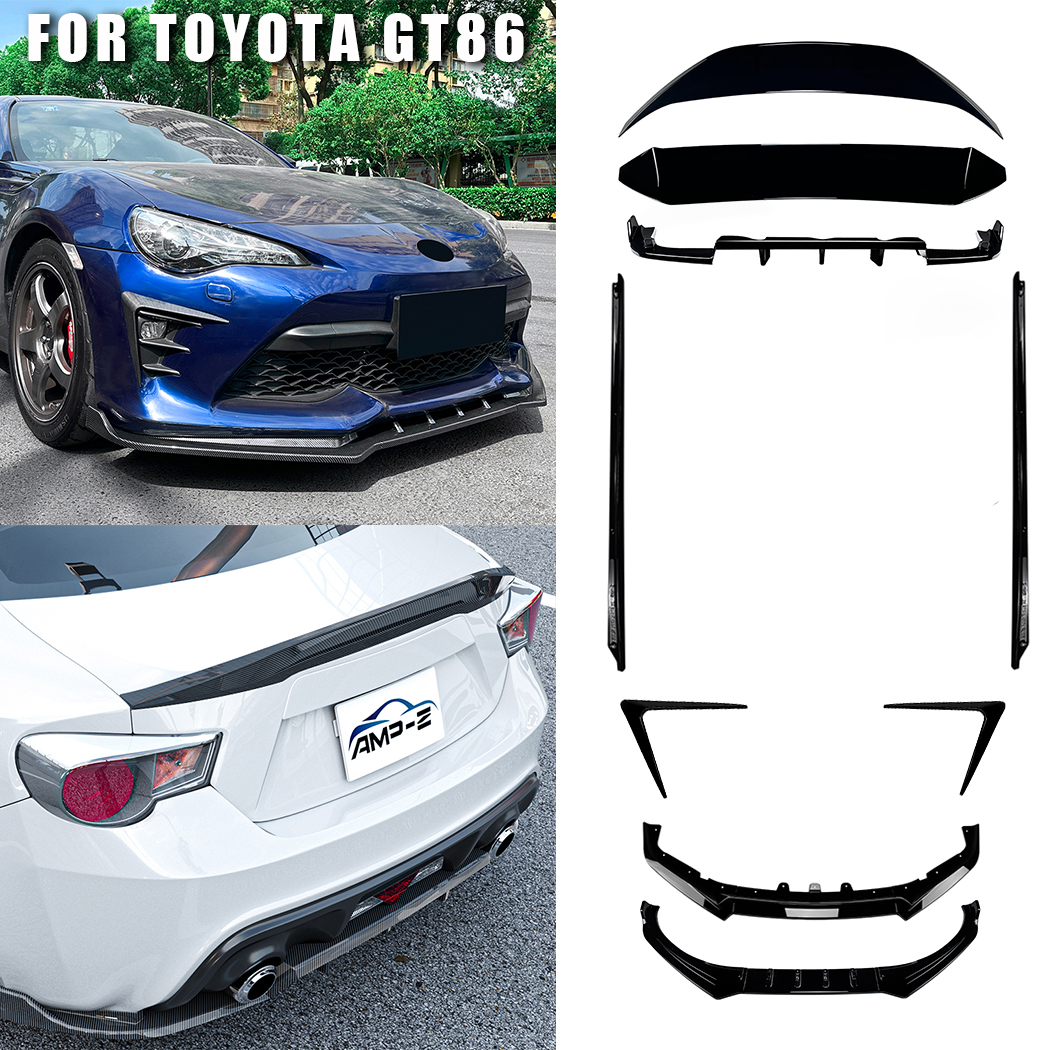 The automotive market offers plenty of opportunities for businesses that understand what enthusiasts want and how to source products reliably. For wholesalers, importers, distributors, and tuning shops, a Toyota GT86 body kit can be an attractive addition to a performance styling product range. The Toyota GT86 is known for its lightweight sports coupe design, rear-wheel-drive layout, and strong enthusiast following. Its styling also makes it a natural platform for exterior customization. However, finding the right products is only half the job. You also need a dependable supplier, consistent product quality, competitive wholesale pricing, and clear communication throughout the purchasing process. So, how do you choose a partner who can support your business beyond the first order? This guide explores the key factors to consider, from product compatibility and bulk ordering to OEM and ODM opportunities.
Before contacting a manufacturer, take a closer look at your target market. Buyers looking for GT86 exterior upgrades may include individual enthusiasts, professional installers, tuning garages, used-car dealers, and specialist aftermarket retailers. B2B buyers serve these customers by sourcing products that match their preferred styling, installation requirements, and budgets. A well-planned product range can help your business serve several customer groups without carrying unnecessary inventory.
A Toyota GT86 aero product range may include front lips, side skirts, rear diffusers, rear spoilers.Complete kits can appeal to customers looking for a consistent appearance, while individual parts may be easier for shops to sell as upgrades. When reviewing a supplier's catalog, check which parts are available separately, which are sold as sets, and whether matching components can be ordered together. This information helps you build a practical product offering for different customer budgets.
A low purchase price does not automatically translate into a profitable wholesale deal. Poor fitment, inconsistent finishes, missing hardware, damaged shipments, and slow responses can all create additional costs. For a distributor, even a small product issue can lead to installation delays, customer complaints, or returns. A reliable supplier should help you manage these risks through clear specifications, repeatable quality checks, realistic lead times, and responsive after-sales communication. Think of supplier selection as building the foundation of your business rather than simply finding the cheapest quotation.
Exterior components need to fit the intended vehicle correctly and maintain consistent dimensions across production batches. Ask the supplier how it checks fitment, whether sample parts can be evaluated, and how production consistency is monitored. If possible, inspect a sample before committing to a large order. Review the mounting points, surface finish, panel alignment, and any required installation hardware. For body kits, these practical details often matter more to installers than attractive catalog photos.
A supplier may deliver an excellent first batch but struggle when order volumes increase. Ask about production capacity, estimated manufacturing time, packaging preparation, and the process for confirming delivery schedules. Clarify how the supplier handles backorders or unexpected production delays. If you sell through a retail network, consistent replenishment is particularly important. A dependable supply arrangement allows you to plan promotions and inventory with greater confidence.
Both manufacturers and trading suppliers can be useful, depending on your business model. A manufacturer may offer closer communication with production, greater visibility into product specifications, and opportunities to discuss customization. A trading supplier may consolidate products from multiple factories, making it easier to purchase a broader assortment through one contact. Neither option is automatically better. The right choice depends on your order volume, product range, customization needs, and expectations for quality control.
Working directly with a manufacturer can simplify discussions about tooling, product revisions, packaging, and production schedules. It may also make it easier to establish repeat-order specifications and develop a longer-term sourcing relationship. However, verify the supplier's actual capabilities rather than relying on its business description alone. Ask which processes are handled in-house, which are outsourced, and how the finished products are inspected. For buyers planning regular bulk orders, this transparency can be especially valuable.
Before choosing a Toyota GT86 body kit supplier, ask practical questions: Which vehicle years and versions does the product fit? What materials and finishes are available? Can the supplier provide product drawings, dimensions, or installation guidance? What are the MOQ, sample cost, and production lead time? How are products packed for export? What happens if a shipment arrives with missing parts or damage? Clear answers make it easier to compare suppliers fairly and identify potential problems before placing an order.
A professional evaluation should cover more than appearance. Review compatibility, construction, finish, packaging, installation requirements, and documentation. Request clear photos from several angles and confirm the exact components included in the quoted price. If the kit contains multiple pieces, make sure the supplier provides a complete parts list. This helps prevent misunderstandings between your purchasing team, warehouse, installers, and end customers.
Body kit materials influence weight, flexibility, surface quality, maintenance requirements, and overall cost. Depending on the product, options may include ABS plastic, polyurethane, fiberglass, or other suitable materials. Each has different performance and processing characteristics, so the best choice depends on the component's design and intended use. Ask the supplier about material specifications, thickness where relevant, surface preparation, and quality-control procedures. Avoid comparing quotations based on price alone when the products use different construction methods.
Never assume that every Toyota GT86 uses identical exterior mounting points or that a kit advertised for one version will fit every related model. Confirm the target model year, vehicle generation, bumper configuration, and any relevant regional differences. If the product is intended for a particular version, have the supplier state that clearly on the quotation and product documentation. Proper fitment information helps reduce returns and gives your sales team accurate details to share with customers.
Inspect the finish for visible imperfections, uneven surfaces, inconsistent edges, and damage-prone areas. Ask whether products are supplied primed, painted, or unfinished, and whether installation hardware is included. Packaging deserves equal attention. Large exterior components need appropriate protection against scratches, deformation, and handling damage during international transportation. Request packaging photos and clarify how cartons or crates are labeled. For distributors, good packaging and clear installation information can make receiving and reselling products much easier.
Wholesale purchasing requires a clear understanding of the commercial terms. A supplier's quoted unit price is only one part of the calculation. You also need to consider minimum order quantities, sample fees, packaging, freight, import charges, payment terms, and potential after-sales expenses. Request an itemized quotation that identifies the exact products and quantities being priced. When comparing suppliers, make sure their quotations cover equivalent specifications and delivery conditions.
Pricing can vary according to material, product design, manufacturing complexity, surface finish, order quantity, tooling requirements, and packaging. Custom-developed components may involve additional development or tooling costs. Larger orders may qualify for better unit pricing, but they also tie up more working capital and increase inventory risk. Ask your supplier to explain volume-based price breaks and whether mixed-product orders qualify. This allows you to negotiate based on your real purchasing needs rather than focusing on a single headline price.
Minimum order quantity, or MOQ, is the smallest quantity a supplier will accept for a particular order or product. Some suppliers may offer samples or small trial orders, while customized products may require higher commitments. If you are entering a new market, ask whether a pilot order is possible before scaling up. For established distributors, negotiate quantities based on sales forecasts, warehouse capacity, and replenishment schedules. A sensible MOQ should support profitable purchasing without leaving your business overloaded with slow-moving stock.
To estimate profitability, calculate the total cost of getting products into your warehouse. Include the purchase price, packaging, freight, insurance where applicable, customs duties, taxes, brokerage fees, and handling costs. You should also account for realistic allowances for damage, returns, and customer support. Compare this landed cost with your expected selling price and channel margins. A slightly more expensive supplier may prove more economical if it offers better packaging, fewer quality issues, and more predictable delivery.
OEM and ODM arrangements can help automotive businesses create a more distinctive product offering. Their suitability depends on the supplier's development capabilities, the buyer's specifications, order volume, and commercial agreement. Before discussing customization, define your target customer, preferred styling, budget, expected sales volume, and launch schedule. A clear brief helps both parties understand what needs to be developed and which costs must be included.
OEM projects generally involve manufacturing according to the buyer's specifications or agreed requirements. For a body kit business, this may include product dimensions, finishing requirements, labeling, packaging, and branding arrangements. Confirm who owns the drawings, tooling, and approved design files. You should also agree on sample approval, permitted production changes, quality standards, and intellectual property protections in writing. These details are essential when you plan to sell products under your own brand.
ODM arrangements may involve adapting an existing design or developing a product around a buyer's concept, depending on the manufacturer's capabilities. A custom Toyota GT86 aero project could focus on styling, component combinations, surface treatment, or a coordinated product family. Start with a clear design brief and establish how prototypes will be reviewed. Confirm development fees, revision limits, timelines, and the conditions for moving into mass production. A structured development process reduces the risk of costly surprises later.
A strong product line balances customer demand, pricing, availability, and inventory risk. Rather than stocking every possible variation, begin with products that suit your core customers. You might offer individual styling upgrades alongside complete Toyota GT86 body kit packages. This creates options for both budget-conscious buyers and customers seeking a more comprehensive transformation. Use actual sales data and customer feedback to decide which products deserve deeper inventory investment.
Regional preferences can differ significantly. Some markets may favor subtle factory-inspired styling, while others may prefer wide fenders, aggressive front lips, or more prominent rear components. Research local competitors, installation shops, and customer inquiries before selecting your initial assortment. Review product photographs, specifications, and pricing with potential retail partners. A focused catalog built around genuine demand is often easier to manage than a large catalog assembled without a clear strategy.
Body kits can take up considerable warehouse space, and large components may be expensive to return. Establish a process for checking incoming shipments, recording product codes, and documenting any damage. Keep installation guidance and compatibility details accessible to your sales team. Track recurring customer questions and supplier-related issues so you can identify patterns. Over time, these records help you forecast replenishment, improve purchasing decisions, and negotiate more effectively with your supplier.
 When evaluating a potential sourcing partner, focus on whether its product offering and commercial capabilities align with your business objectives. AMP-Z can be included in your supplier evaluation process when exploring automotive aftermarket styling products and potential cooperation. Before making a purchasing decision, contact the company to confirm its current Toyota GT86 body kit availability, product specifications, supported vehicle versions, order requirements, and export arrangements. Request a detailed quotation rather than assuming that every configuration or service is available.
Start with a clear inquiry that explains your business type, destination market, expected order quantity, and preferred product categories. Ask AMP-Z to confirm available Toyota GT86 aero options, material specifications, surface finishes, sample arrangements, MOQ, lead times, and packaging. If you are interested in OEM or ODM cooperation, describe your branding or development requirements separately. Request written confirmation of the agreed specifications and quality expectations before proceeding. This approach makes the discussion more productive and helps both parties assess whether the proposed cooperation is commercially suitable.
One common mistake is choosing a supplier based entirely on the lowest quotation. Another is ordering large quantities before confirming fitment or evaluating a sample. Buyers may also overlook shipping damage, underestimate landed costs, or assume that customization is included in the unit price. To avoid these problems, compare complete quotations, verify product compatibility, agree on inspection requirements, and document commercial terms. It is also wise to avoid unsupported promises about exclusivity, delivery times, or product performance. Strong purchasing decisions rely on evidence, not assumptions.
Before approving a supplier, review the following points: (1) Confirm vehicle compatibility and product specifications. (2) Evaluate samples where practical. (3) Check manufacturing or sourcing capabilities. (4) Compare itemized quotations and landed costs. (5) Confirm MOQ, payment terms, and lead times. (6) Review packaging and export documentation. (7) Clarify defect reporting and after-sales procedures. (8) Document OEM or ODM responsibilities if relevant. (9) Check the supplier's communication and responsiveness. (10) Start with an order size that matches your risk tolerance. A consistent checklist makes supplier comparisons more objective and repeatable.

Sourcing a Toyota GT86 body kit for wholesale is about more than finding attractive styling at a competitive price. You need a supplier who can meet your specifications, communicate clearly, support consistent quality, and work within your commercial requirements. Evaluate manufacturers and suppliers carefully, calculate your landed costs, confirm fitment, and test products before making larger commitments. If OEM or ODM development is part of your strategy, establish clear expectations from the beginning. For businesses considering AMP-Z, the next step is to discuss current product availability, wholesale terms, and customization possibilities directly. With a disciplined sourcing process, you can build a more competitive product line and develop supplier relationships that support sustainable growth.
When choosing a Toyota GT86 body kit supplier, consider product quality, vehicle fitment, material specifications, wholesale pricing, production lead times, and after-sales support. A reliable supplier should provide clear product information, transparent ordering terms, and consistent communication. For long-term cooperation, it is also important to confirm whether the supplier can support repeat orders as your business grows.
Yes. Many automotive aftermarket suppliers offer bulk purchasing options for wholesalers, distributors, and tuning shops. The minimum order quantity (MOQ) and wholesale price depend on the product type, order volume, and supplier's terms. Before placing a bulk order, request a detailed quotation and confirm product availability, packaging, lead times, and shipping costs.
Wholesale prices are influenced by material selection, product design, manufacturing complexity, surface finish, order quantity, packaging, and customization requirements. Shipping costs and import duties can also affect your final purchasing cost. To compare suppliers accurately, request itemized quotations for products with equivalent specifications and calculate the total landed cost.
Before ordering, confirm the intended vehicle model year, generation, bumper configuration, and any relevant compatibility requirements. Ask the supplier for product dimensions, fitment information, installation instructions, or sample parts where available. Verifying compatibility before mass production helps reduce installation problems, returns, and additional costs.
A Toyota GT86 aero kit may include front lips, front bumpers, side skirts, rear diffusers, spoilers, and other exterior styling components. The exact contents vary by design and supplier. Always request a complete product list and confirm whether the components are available individually or only as a full kit.


